
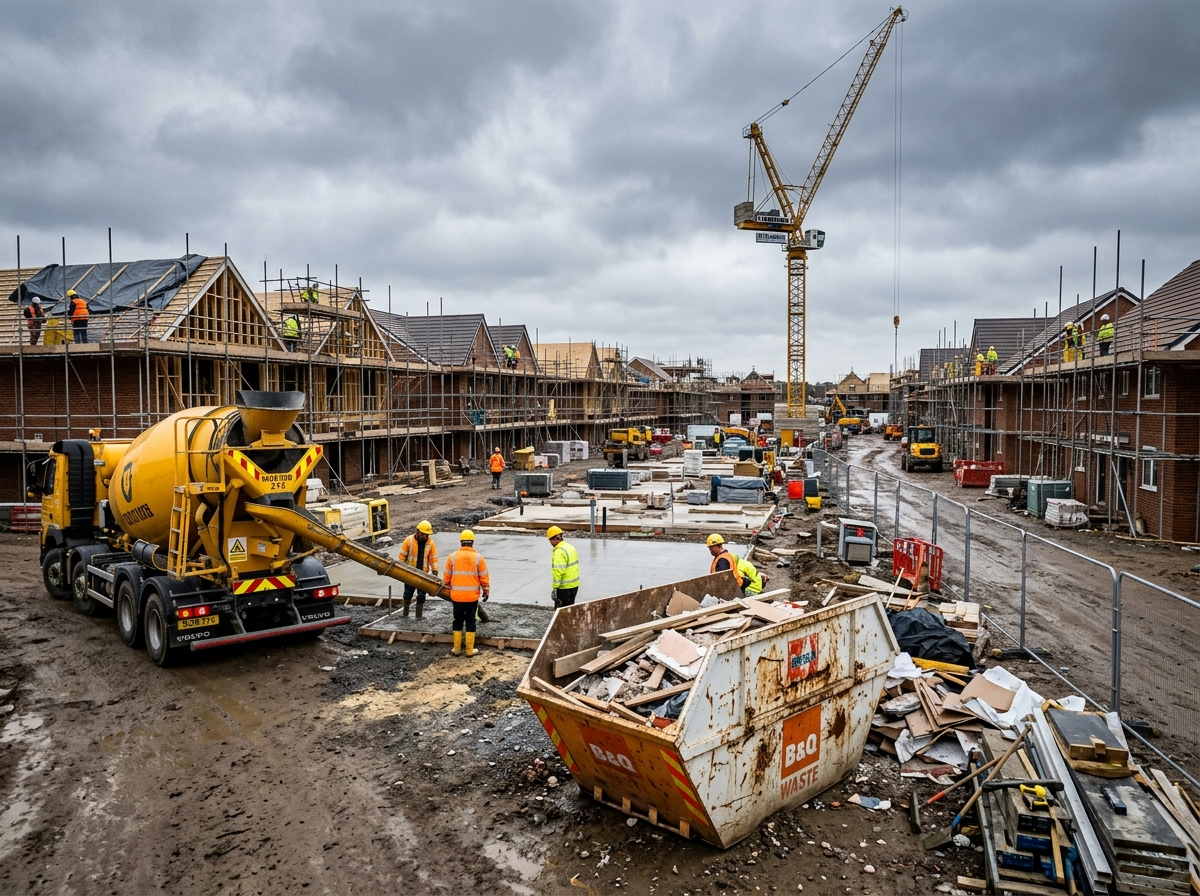
The scale of construction waste in the UK
Construction, demolition, and excavation activities generate more waste than any other sector in the UK. According to government statistics, the construction industry produces approximately 60 per cent of all waste generated in England — tens of millions of tonnes every year. Managing this waste effectively is not just an environmental obligation; it is a significant commercial opportunity.
Poor waste management on construction sites leads to inflated disposal costs, regulatory penalties, project delays, and reputational damage. Good waste management — with proper planning, segregation, and tracking — reduces costs, recovers valuable materials, demonstrates environmental responsibility, and keeps projects on schedule.
This guide covers the practical steps that construction companies, demolition contractors, and site managers can take to improve their waste management practices.
Understanding construction waste streams
Construction waste is not a single, homogeneous material. It encompasses a wide range of waste types, each with different handling, treatment, and disposal requirements.
Inert waste
Inert waste — materials like concrete, bricks, tiles, stone, and uncontaminated soil — makes up the largest proportion of construction waste by weight. These materials do not decompose, do not produce leachate, and pose minimal environmental risk. They are also the easiest to recycle, with well-established markets for crushed concrete and recycled aggregates.
Non-hazardous waste
This category includes materials like wood, plasterboard, plastics, metals, and mixed general waste. These materials can often be recycled or recovered, but they require proper segregation to maximise recovery rates. Mixed loads of non-hazardous waste typically go to materials recovery facilities, where they are sorted — but pre-sorting on site yields better recovery rates and lower disposal costs.
Hazardous waste
Construction activities can generate various hazardous wastes, including asbestos, contaminated soils, paint and solvent residues, treated timber, and certain insulation materials. These wastes must be handled, transported, and disposed of in accordance with the Hazardous Waste Regulations, with full consignment note documentation and transfer to appropriately permitted facilities.
Excavation waste
Large construction projects often generate significant volumes of excavation waste — soil, clay, rock, and subsoil. Where possible, this material should be reused on site (for example, as fill or landscaping material). Where it must be removed, proper classification is essential to determine whether it is inert, non-hazardous, or potentially contaminated.
The regulatory framework
Site Waste Management Plans
Although the legal requirement for formal Site Waste Management Plans (SWMPs) was revoked in England in 2013, the principle behind them remains best practice. A waste management plan that identifies expected waste types and quantities, sets targets for reuse and recycling, and assigns responsibilities for waste handling is an invaluable management tool.
Many clients and principal contractors still require SWMPs as a contractual condition, and the discipline of creating one forces project teams to think about waste before it becomes a problem.
Duty of care
Every business that produces, stores, transports, or disposes of waste has a duty of care under the Environmental Protection Act 1990. This means you must:
- Store waste securely to prevent escape or unauthorised access
- Transfer waste only to authorised carriers
- Provide an accurate description of the waste
- Complete waste transfer notes (or consignment notes for hazardous waste)
- Keep records for a minimum of two years (three years for hazardous waste)
Waste classification
Correctly classifying your waste is a legal requirement and determines how it must be handled and where it can go. The European Waste Catalogue (EWC) coding system is used to classify waste types. Getting the classification wrong — particularly for materials that might be hazardous — can result in enforcement action and criminal prosecution.
Practical waste management strategies
1. Plan before you start
The cheapest waste is the waste you do not create. During the design and procurement stages, consider how material choices and construction methods can minimise waste generation. Off-site fabrication, standardised dimensions, and careful material ordering all reduce the amount of waste that ends up in skips.
A pre-construction waste audit — estimating waste types and quantities for each phase of the project — helps you plan skip provision, book disposal capacity, and set realistic recycling targets.
2. Segregate on site
Segregation at source is the single most effective way to reduce waste disposal costs and increase recycling rates. Providing clearly labelled skips or containers for different material types — timber, metals, plasterboard, inert materials, mixed waste — allows each stream to go to the most cost-effective and environmentally appropriate destination.
Mixed waste is expensive to dispose of because it must go through sorting processes, and a proportion will inevitably end up in landfill. Segregated waste, by contrast, can go directly to specialist recyclers at lower cost — and in some cases, materials like scrap metal have positive value.
3. Track every movement
Every skip that leaves your site should be tracked — where it went, what it contained, how much it weighed, and what happened to it. This tracking is essential for duty of care compliance, but it also provides the data you need to manage costs and identify improvement opportunities.
Digital systems make this tracking significantly easier. When waste movements are recorded through a platform that integrates with weighbridge software and carrier management systems, you get a complete, auditable record without manual paperwork.
4. Choose your waste contractors carefully
Not all waste contractors are equal. When selecting skip hire, grab hire, or waste collection services, consider:
- Licensing and permits — verify that the contractor holds the appropriate waste carrier registration and that their facilities are properly permitted
- Recycling rates — ask for evidence of actual recycling and recovery rates, not just claims
- Transparency — contractors who can provide detailed weight-based reporting and final destination data are preferable to those who cannot
- Technology — contractors running digital weighbridges and filing their waste movements properly are more likely to give you accurate data and a defensible record
5. Reuse materials on site
Before sending materials off site, consider whether they can be reused within the project. Crushed concrete and brick can serve as sub-base or fill. Excavated soil can be used for landscaping. Timber from formwork can be reused if it is in good condition. On-site reuse eliminates transport costs and disposal fees entirely.
The CL:AIRE Definition of Waste: Development Industry Code of Practice provides a framework for reusing excavated materials on site without them being classified as waste — potentially saving significant disposal costs on projects with large earthworks components.
6. Measure and benchmark
You cannot improve what you do not measure. Track your waste generation rates — typically expressed as tonnes or cubic metres per £100,000 of construction value — and benchmark them against industry standards and your own previous projects.
The Waste and Resources Action Programme (WRAP) publishes benchmarks for construction waste generation that provide a useful reference point. If your waste generation rates are significantly above the benchmark, investigate why and take targeted action to improve.
The role of technology
Modern waste management on construction sites is increasingly supported by digital tools:
- Waste tracking platforms that record every waste movement from site to final destination
- Weighbridge software at transfer stations and recycling facilities that provides accurate, auditable weight data
- Skip tracking systems that show where your skips are, when they were exchanged, and what they contained
- Invoicing integration that links waste data directly to billing, eliminating manual reconciliation
- Reporting dashboards that show waste KPIs at project, site, and company level
These tools transform waste management from a reactive, administrative burden into a proactive, data-driven discipline. They provide the visibility needed to identify problems early, the data needed to make informed decisions, and the audit trail needed to demonstrate compliance.
The commercial case
Effective construction waste management is not just about compliance — it is about cost. Landfill tax in the UK currently stands at over £100 per tonne for non-inert waste, making disposal the most expensive option for every waste stream. Every tonne diverted from landfill through reuse, recycling, or recovery saves money.
Beyond direct disposal costs, good waste management reduces the risk of regulatory penalties, improves your standing with clients who value sustainability, and supports the increasingly important environmental credentials that winning tenders often requires.
Construction waste management is not a cost centre to be minimised. It is an operational discipline that, when done well, delivers genuine commercial advantage.