
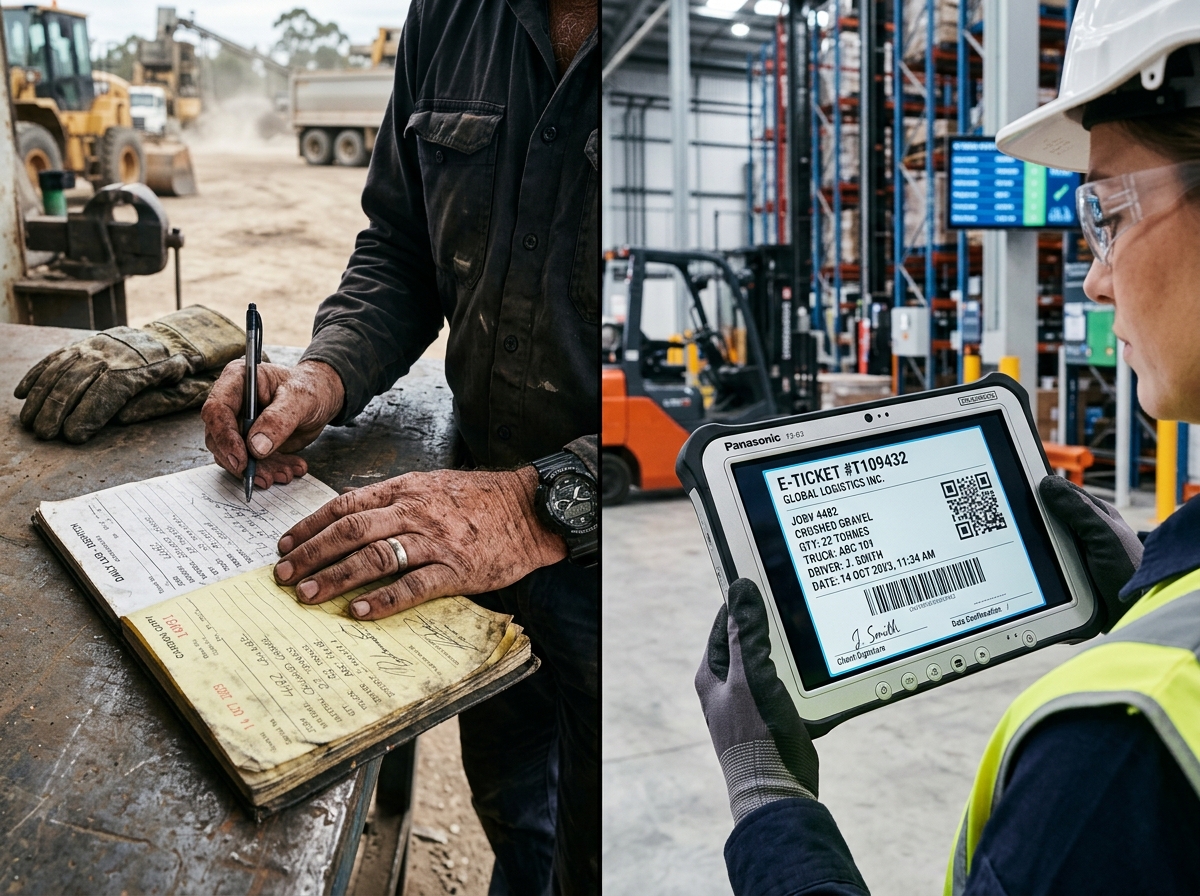
The end of paper waste transfer notes is coming
For decades, the UK waste industry has relied on paper waste transfer notes to document the movement of waste from producer to carrier to disposal or recovery facility. That era is coming to a definitive end. From October 2026, the Environment Agency will require all waste transfers in England to be recorded digitally, replacing the paper-based system that has been in place since the Environmental Protection Act 1990.
This is not a minor administrative change. It represents the most significant overhaul of waste documentation in a generation. For waste operators, carriers, producers, and treatment facilities, the transition to digital waste transfer notes will affect daily operations, data management, staff training, and technology infrastructure.
The good news is that there is still time to prepare — but not as much as you might think. With the October 2026 deadline now just seven months away, operators who have not yet started planning their transition need to act now.
What are waste transfer notes?
Before looking at what is changing, it is worth briefly recapping what waste transfer notes are and why they matter.
A waste transfer note is a legal document that must accompany every transfer of non-hazardous waste between parties. It records essential information about the waste being moved: a description of the waste, the quantity, the type of container, the waste producer, the carrier, and the destination. Both parties involved in the transfer — the person handing over the waste and the person receiving it — must sign the note and keep a copy for at least two years.
For hazardous waste, consignment notes serve a similar but more detailed purpose, with stricter requirements around waste classification, coding, and tracking.
These documents form the backbone of the UK’s duty of care system for waste. They exist to ensure that waste is handled responsibly, that it can be traced from source to final destination, and that regulators can verify compliance. In practice, however, the paper-based system has significant shortcomings that the digital transition aims to address.
What is changing in October 2026?
The Environment Agency’s digital waste tracking service will become mandatory for all waste transfers in England from October 2026. The key changes are substantial and affect every part of the waste chain.
A single digital record per waste movement
Instead of paper notes exchanged between parties, each waste movement will be recorded as a single digital entry in a centralised system. Both the transferor and the transferee will contribute to and validate the same digital record, eliminating discrepancies between duplicate paper copies.
Real-time regulatory visibility
The Environment Agency will have real-time access to waste movement data. This is a fundamental shift from the current system, where regulators typically only see waste transfer notes during site inspections or investigations — often months or years after the transfer took place. Digital tracking will allow the EA to identify patterns, anomalies, and potential non-compliance as they happen.
Standardised data capture
The digital system will enforce standardised fields and waste classification codes, reducing the inconsistencies and errors that plague the paper system. Waste descriptions will need to follow prescribed formats, and European Waste Catalogue (EWC) codes will be mandatory for every transfer.
End-to-end traceability
Digital waste transfer notes will create a complete chain of custody for every waste movement, from initial production through any intermediate transfers to final disposal or recovery. This end-to-end traceability is designed to make illegal waste dumping and misclassification significantly harder to conceal.
Who is affected?
The short answer is: virtually everyone involved in the waste industry. The digital waste transfer note requirement applies across the entire waste chain.
Waste producers
Any business or organisation that produces waste — from construction companies and manufacturers to offices and retail premises — will need to ensure their waste transfers are recorded digitally. For large waste producers who manage their own waste movements, this means direct engagement with the digital system. For smaller producers, much of the burden will fall on their waste carriers and contractors, but producers will still need to verify that digital records are being created.
Waste carriers
Licensed waste carriers will be at the front line of the transition. Every collection and delivery will need to be logged digitally, typically at the point of collection. Carriers who currently rely on pre-printed paper transfer notes completed by hand will need mobile devices, reliable connectivity, and trained drivers to operate the new system.
Waste treatment and disposal facilities
Transfer stations, materials recovery facilities, energy-from-waste plants, and landfill sites will need to receive and validate digital records for every incoming load. For facilities already using weighbridge software to record incoming waste, much of the required data is already being captured — the challenge will be ensuring that data flows into the regulatory system correctly.
Brokers and dealers
Waste brokers and dealers who arrange waste transfers without physically handling the waste will also need to engage with the digital system, ensuring that the transfers they arrange are properly documented.
Key requirements of the new digital system
While the Environment Agency has been refining the technical specifications, several core requirements are already clear and operators should be planning around them.
Unique digital records for every transfer. Each waste movement will require a unique digital record created in or submitted to the EA’s tracking system. Records must be created before or at the time of transfer — retrospective entry will not be acceptable as standard practice.
Mandatory waste classification. Every digital transfer note will require accurate EWC codes. The days of vague waste descriptions on paper notes are over. Operators will need confidence in their waste classification processes and may need to invest in staff training or analytical services for complex waste streams.
Carrier and site verification. The digital system will cross-reference carrier licence numbers and site permit details, making it immediately apparent if waste is being moved by unregistered carriers or sent to unpermitted facilities.
Data retention and access. Digital records will be retained in the central system, but operators will still be expected to maintain their own records and demonstrate compliance during inspections. Having your own digital systems that mirror and supplement the regulatory record will be essential.
Integration capability. The EA’s system will offer an API for operators and software providers to integrate their existing systems directly, reducing the need for manual data entry. Operators using modern waste management software should expect their providers to build these integrations.
How to prepare your business
With seven months until the deadline, preparation should already be under way. Here are the practical steps every waste operator should be taking.
1. Audit your current documentation process
Start by mapping exactly how waste transfer notes are currently created, completed, and stored in your operation. Identify every point where paper is used, every person who completes or signs a note, and every place where copies are filed. This audit will reveal the scale of change required and highlight the areas where digital transition will have the greatest impact.
2. Assess your technology readiness
Digital waste transfer notes require digital infrastructure. At a minimum, you will need devices capable of accessing the EA’s system (whether via a web interface or integrated software), reliable internet or mobile connectivity at the locations where transfers occur, and back-office systems capable of managing digital records.
For many operators, this assessment will reveal gaps. Weighbridge cabins without reliable internet, drivers without suitable mobile devices, and back-office systems that cannot export or import data in standard formats are all common issues that need addressing before October.
3. Review and upgrade your software
If your current waste management software does not support digital waste transfer notes, you need to have a conversation with your provider now. Key questions to ask include whether they are building an integration with the EA’s digital waste tracking service, what the timeline for delivery is, and whether the integration will be included in your existing licence or charged as an additional module.
If your provider cannot give satisfactory answers, it may be time to evaluate alternatives that are being built with the new requirements in mind.
4. Train your team
The transition from paper to digital will affect staff at every level. Weighbridge operators, drivers, site managers, and compliance teams will all need training on the new processes. Do not underestimate the time and effort required — particularly for staff who are less comfortable with digital technology. Build in time for familiarisation, practice, and troubleshooting before the deadline.
5. Clean up your waste classification data
The digital system’s requirement for accurate EWC codes means that operators need to review their waste classification practices now. If your business has been using imprecise or inconsistent waste descriptions on paper notes, the digital system will not accept that approach. Invest time in creating a clear, accurate waste classification library that your team can draw on.
6. Plan for the transition period
The switch from paper to digital is unlikely to be instantaneous. Plan for a transition period where you may need to run parallel processes. Identify which waste streams and transfer points you will digitise first, and create a phased rollout plan that allows you to iron out problems before the deadline.
How Heavy Tech helps with digital waste tracking
At Heavy Tech, we have been building our weighbridge software and waste management platform with the digital future of the industry in mind. Our systems are designed to capture the data that digital waste transfer notes require — waste types, EWC codes, quantities, carrier details, and site information — as a natural part of your daily weighbridge and waste processing operations.
Seamless data capture at the weighbridge
Our weighbridge system records every incoming and outgoing load with the level of detail that the new digital requirements demand. Waste classification, carrier details, vehicle registration, net weights, and timestamps are all captured automatically, reducing manual data entry and the errors that come with it.
Integration-ready architecture
Our platform is built with open APIs and integration capability at its core. As the Environment Agency finalises the technical specifications for its digital waste tracking service, we are preparing integrations that will allow our customers to submit digital waste transfer notes directly from their existing workflows — without the need for duplicate data entry or switching between systems.
Compliance reporting and audit trails
Every transaction recorded in our system creates a comprehensive audit trail that supports regulatory compliance. When the EA comes to inspect, you will have clear, accurate, and accessible records that demonstrate your compliance with digital waste tracking requirements.
Support for your transition
We understand that the move to digital waste transfer notes is a significant change for many operators. Our team is available to help you assess your readiness, plan your transition, and configure your systems to meet the new requirements. We are not just a software provider — we are a partner in helping your business navigate regulatory change.
Timeline and next steps
Here is a practical timeline for the remaining months before the October 2026 deadline.
Now through May 2026 — Complete your technology and process audit. Identify gaps in your digital infrastructure, software capability, and staff readiness. Begin conversations with your software providers about integration plans.
June to July 2026 — Implement technology upgrades and begin staff training. If you are switching software providers, this is the latest you should be starting that process to allow adequate time for data migration, configuration, and testing.
August to September 2026 — Run parallel processes with both paper and digital systems where possible. Use this period to identify and resolve problems before the mandatory switch. Ensure all staff are confident with the new digital workflows.
October 2026 — The mandatory digital waste tracking system goes live. All waste transfers in England must be recorded digitally from this date.
Operators should also monitor the Environment Agency’s official channels for updates on the technical specifications, any changes to the timeline, and guidance documents as they are published. The EA has committed to providing comprehensive guidance and support materials in advance of the deadline.
Preparing now pays dividends later
The transition to digital waste transfer notes is not just a compliance exercise — it is an opportunity to improve your operations. Digital records are easier to search, analyse, and report on than paper files. Automated data capture reduces errors and saves time. Real-time visibility of waste movements supports better operational decision-making. And robust digital compliance records reduce the risk and stress of regulatory inspections.
Operators who treat this transition as an opportunity to modernise their data management and compliance processes will find themselves with a genuine competitive advantage. Those who leave preparation to the last minute will face a stressful and potentially costly scramble to comply.
The October 2026 deadline is firm, and the direction of travel is clear. The time to start preparing is now. If you want to understand how Heavy Tech can support your transition to digital waste transfer notes, get in touch with our team or explore our waste management solutions to see how our platform is built for the digital future of waste operations.