
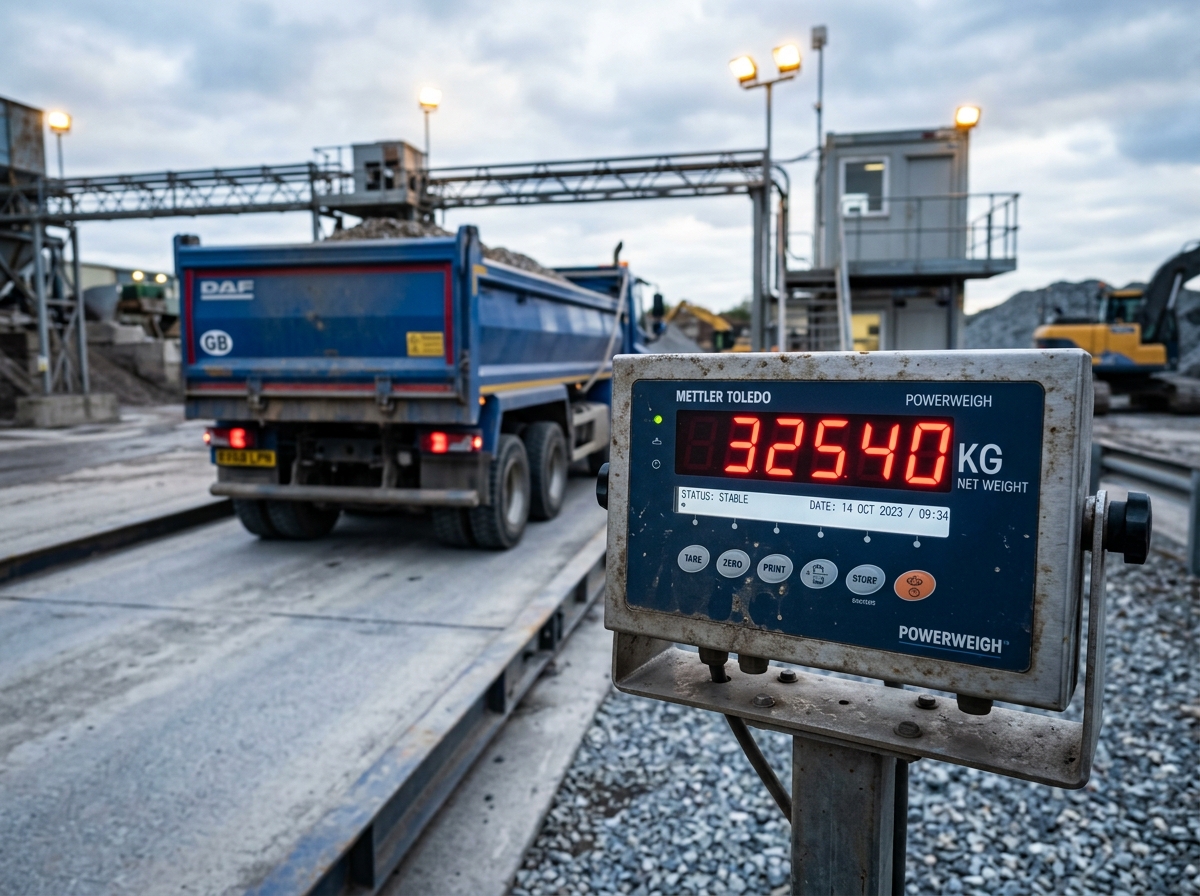
Why weighbridge management matters more than you think
The weighbridge is the front door to every waste and aggregate operation. Every tonne of material that enters or leaves your site crosses it. Yet at many businesses, the weighbridge still runs on a combination of handwritten dockets, manual data entry, and a weigh clerk who has memorised which haulier drives which lorry.
This approach worked when volumes were low. It does not scale. A single mis-keyed weight can throw off an entire day’s invoicing. A lost paper ticket can mean an unrecoverable revenue gap. And when the Environment Agency asks for a full audit trail, a filing cabinet full of carbon-copy dockets is not going to inspire confidence.
Digital weighbridge management replaces these fragile, manual processes with software that captures, validates, and stores data automatically. The result is faster throughput, fewer errors, and a complete digital record of every transaction that crosses your site.
What a digital weighbridge system actually does
At its core, a weighbridge software platform connects your physical weighbridge hardware — the load cells, indicators, and barriers — to a centralised software system. But the real value comes from the layers of automation built on top of that connection.
Automatic number plate recognition (ANPR)
ANPR cameras capture the registration plate of every vehicle as it arrives. The system matches the plate against a database of known hauliers, vehicles, and expected deliveries. If the vehicle is recognised, the system can pre-populate the transaction with the correct customer, material type, and pricing — before the driver even steps out of the cab.
This eliminates one of the biggest sources of weighbridge errors: manual vehicle identification. No more guessing whether “Dave’s white tipper” is registered to Company A or Company B.
Automated first and second weighing
A typical weighbridge transaction involves two weighings: one when the vehicle arrives loaded (or empty, depending on your operation), and one when it leaves. Digital systems link these two events automatically using the vehicle registration, calculating the net weight without any manual arithmetic.
Some systems go further, supporting unattended weighing where regular drivers can complete the entire process through a self-service kiosk or even from their cab via a mobile app. This is particularly valuable for high-volume sites where queues build up during peak hours.
E-tickets and digital dockets
Paper weighbridge tickets are a liability. They get lost, damaged, or filled in incorrectly. Digital e-tickets are generated automatically at the point of weighing and can be:
- Emailed directly to the haulier and customer
- Stored against the transaction record for instant retrieval
- Printed on-site if a physical copy is still needed
- Linked to invoicing so there is a clear audit trail from weighing to payment
The shift from paper to digital dockets is often the single change that delivers the fastest return on investment. It eliminates data re-entry, reduces disputes, and makes month-end reconciliation dramatically simpler.
Material and product classification
Every load that crosses the weighbridge needs to be classified — is it Type 1 aggregate, topsoil, inert waste, or something else entirely? Digital systems let you maintain a structured product catalogue with predefined material codes, pricing tiers, and waste classification codes (such as EWC codes for waste operations).
This means your weighbridge operator selects from a controlled list rather than typing free text, which prevents the kind of inconsistencies that make reporting a nightmare.
The business case for going digital
Faster throughput
An automated weighbridge transaction — where the vehicle is recognised by ANPR, the material is pre-selected, and the ticket is generated electronically — can take under 30 seconds. Compare that to the two or three minutes a manual process requires, and the impact on a busy site is significant. On a site processing 200 loads per day, that time saving alone can eliminate queuing.
Fewer errors, fewer disputes
Manual data entry is inherently error-prone. A single transposed digit on a weight reading can mean the difference between invoicing for 18 tonnes and 81 tonnes. Digital systems capture weight data directly from the indicator, removing the human from the equation. The result is cleaner data, fewer credit notes, and far fewer phone calls from customers disputing their invoices.
Real-time visibility
With a digital system, managers can see exactly what is happening at the weighbridge in real time — how many loads have been processed, what materials are moving, and whether throughput is on track. This kind of visibility is impossible with paper-based processes, where data only becomes available after it has been manually entered into a spreadsheet or accounting system.
Regulatory compliance
The UK waste industry operates under increasingly strict regulatory requirements. Digital weighbridge records provide the kind of auditable, timestamped data that regulators expect. Every transaction is logged with the vehicle, driver, material, weight, and time — creating a complete chain of custody that can be produced on demand.
What to look for in a weighbridge management system
Not all weighbridge software is created equal. When evaluating options, consider the following:
- Hardware compatibility — Does the system work with your existing weighbridge indicator, or does it require proprietary hardware? The best systems are hardware-agnostic, connecting to any standard indicator via serial or IP.
- Integration with your back office — A weighbridge system that does not talk to your invoicing and accounting software creates a data silo. Look for platforms where weighbridge data flows directly into billing.
- ANPR quality and reliability — ANPR is only useful if it works reliably in real-world conditions: rain, mud, darkness, and partially obscured plates. Ask vendors about recognition rates in outdoor, industrial environments.
- Scalability — Can the system handle multiple weighbridges across multiple sites? If you are planning to grow, choose a platform that scales with you.
- Reporting and analytics — Beyond basic transaction records, look for systems that offer insights into throughput trends, material volumes, and customer activity.
Common pitfalls when implementing digital weighbridge management
Underestimating change management
The technology is the easy part. Getting your weighbridge operators, drivers, and office staff to adopt new processes takes effort. Invest time in training and communicate the benefits clearly — especially to operators who may feel that automation threatens their role.
Ignoring data quality at the start
A digital system is only as good as the data it contains. If you migrate with incomplete customer records, inconsistent material codes, or duplicate vehicle entries, you will carry those problems into the new system. Take the time to clean your data before you go live.
Choosing a standalone system
A weighbridge system that operates in isolation — disconnected from your order management, invoicing, and compliance tools — will create more work, not less. The greatest efficiency gains come from end-to-end integration, where a weighbridge transaction triggers downstream processes automatically.
Making the transition
Moving from manual to digital weighbridge management does not have to happen overnight. Many businesses start by digitising the weighbridge transaction itself — capturing weights and generating e-tickets electronically — before layering on ANPR, unattended weighing, and back-office integration.
The important thing is to start. Every day spent on manual processes is a day of lost efficiency, increased risk, and missed insight. Modern weighbridge software is mature, proven, and designed for the realities of heavy industry. The question is not whether to digitise your weighbridge — it is how quickly you can get it done.