
The multi-site reality
Growth in the waste industry almost always means more sites. A second transfer station, a new recycling facility, an additional landfill — each acquisition or opening extends your operational footprint. And with each new site comes a familiar set of problems: inconsistent processes, fragmented data, and a management team that cannot see the full picture without making phone calls or driving between locations.
Running a single waste site well is hard enough. Running five, ten, or twenty sites with any degree of consistency and efficiency requires a fundamentally different approach to operations management. The companies that get this right tend to share one thing in common: they have invested in centralised systems that connect every site into a single, coherent operation.
The challenges of multi-site waste operations
Inconsistent processes
When sites operate independently, they inevitably develop their own ways of doing things. One site classifies materials one way, another uses different codes. Weighbridge procedures vary. Pricing structures diverge. Reporting formats differ. The result is an organisation where every site is essentially running its own business, making it nearly impossible to compare performance or enforce standards.
Fragmented data
If each site uses its own spreadsheets, its own filing system, or its own standalone software, consolidating data for management reporting becomes a manual, error-prone exercise. Questions that should be simple — How many tonnes did we process across all sites last month? Which site has the highest throughput? Where are we losing margin? — require someone to collect, clean, and merge data from multiple sources.
Limited visibility
When you cannot see what is happening across your sites in real time, you are managing reactively rather than proactively. Problems only surface when they have already caused damage — a compliance breach, a customer complaint, a missed revenue target. By the time the information reaches head office, the opportunity to intervene has often passed.
Compliance complexity
Each site operates under its own environmental permit, with its own conditions and reporting requirements. Keeping track of permit limits, waste acceptance criteria, and regulatory returns across multiple sites is a significant administrative burden. A missed return or an exceeded threshold at any single site can trigger enforcement action that affects the entire business.
Staffing and knowledge silos
Multi-site operations often suffer from key-person dependencies. The weighbridge operator at Site A is the only person who knows how that site’s system works. The office manager at Site B is the only one who can produce the monthly reports. When these people are absent, processes grind to a halt. Knowledge lives in people’s heads rather than in systems.
How centralised software solves these problems
A platform designed for multi-site operations addresses each of these challenges by creating a single source of truth that spans every location.
Standardised workflows
When every site uses the same software, they follow the same processes. Material codes are consistent. Weighbridge procedures are uniform. Pricing is managed centrally. This does not mean every site is identical — the system can accommodate site-specific configurations — but the core workflows and data structures are the same everywhere.
This standardisation has a compounding effect. It makes staff training easier, because an operator who has worked at one site can transfer to another without relearning everything. It makes data meaningful, because you are comparing like with like. And it makes compliance simpler, because the same reporting tools work across all sites.
Real-time, cross-site visibility
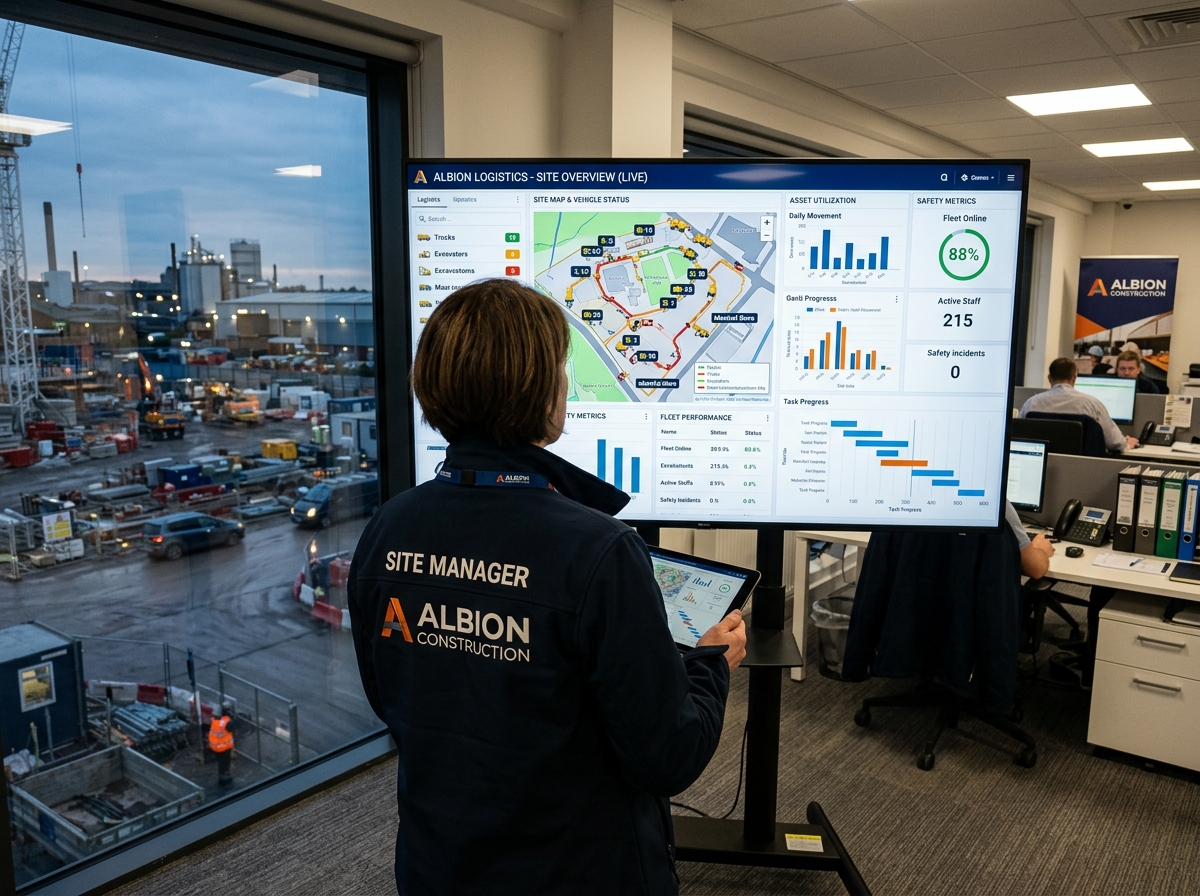
With a centralised system, managers can see operational data from every site on a single dashboard. Tonnages, vehicle movements, material flows, and financial performance are all visible in real time. This means you can spot trends, identify underperforming sites, and respond to issues before they escalate.
For example, if throughput at one site drops unexpectedly, you can investigate immediately rather than waiting for a weekly report. If a particular material type is building up at one facility but in demand at another, you can redirect flows. This kind of operational agility is simply not possible with disconnected, site-level systems.
Centralised customer and pricing management
Many waste companies serve the same customers across multiple sites. Without a centralised system, each site may have its own record of that customer, potentially with different pricing agreements, contact details, and credit terms. This leads to inconsistencies, billing disputes, and a poor customer experience.
A multi-site platform maintains a single customer record that is accessible from every location. Pricing agreements are managed centrally, ensuring consistency. When a customer queries an invoice, your team can see their complete history across all sites without making phone calls.
Unified compliance tracking
Centralised software can track permit conditions, waste acceptance criteria, and tonnage limits for every site in a single place. Automated alerts can notify managers when a site is approaching a permit threshold, giving them time to take action. Regulatory returns can be generated from the same system, using data that has been captured consistently across all locations.
This is particularly valuable for weighbridge data, which forms the foundation of most waste compliance reporting. When every weighbridge transaction at every site flows into the same system, producing accurate returns becomes a matter of running a report rather than assembling a jigsaw.
Scalable infrastructure
A well-designed multi-site platform is built to scale. Adding a new site should be a configuration exercise, not a project. The system should accommodate new weighbridges, new users, new material types, and new customer accounts without requiring bespoke development. This means your technology grows with your business rather than constraining it.
Practical steps for multi-site management
Start with data standardisation
Before you can manage multiple sites effectively, you need a common language. Agree on a single set of material codes, customer naming conventions, and pricing structures. This groundwork makes everything that follows easier.
Implement centrally, configure locally
Roll out your chosen platform across all sites, but allow for local configuration where it is genuinely needed. A site that handles hazardous waste will have different workflows from one that processes inert materials, and the system should accommodate that. The key is that these variations are managed within a single platform, not in separate systems.
Invest in connectivity
Multi-site software depends on reliable connectivity. Ensure that every site has a stable internet connection, and that the platform can handle temporary outages gracefully. Offline capability — where transactions are captured locally and synchronised when the connection is restored — is essential for industrial environments.
Use data to drive decisions
The greatest benefit of a centralised system is the data it produces. Use it. Build dashboards that show cross-site performance. Hold regular reviews where site managers compare metrics. Identify best practices at high-performing sites and replicate them across the business. Create route optimisation strategies that consider all your sites as a network rather than isolated points.
Do not forget the people
Technology is an enabler, not a solution in itself. Multi-site management requires strong leadership, clear communication, and a culture of accountability. The best software in the world will not help if site managers do not engage with it or if head office ignores the data it produces.
The competitive advantage
Waste companies that master multi-site operations management gain a significant competitive edge. They can serve larger customers who require coverage across multiple regions. They can optimise material flows between sites, reducing transport costs and maximising recovery. They can demonstrate regulatory compliance with confidence. And they can make informed, data-driven decisions about where to invest and where to improve.
In an industry where margins are tight and regulation is increasing, these advantages are not marginal — they are the difference between companies that grow profitably and those that simply grow.