
The empty miles problem
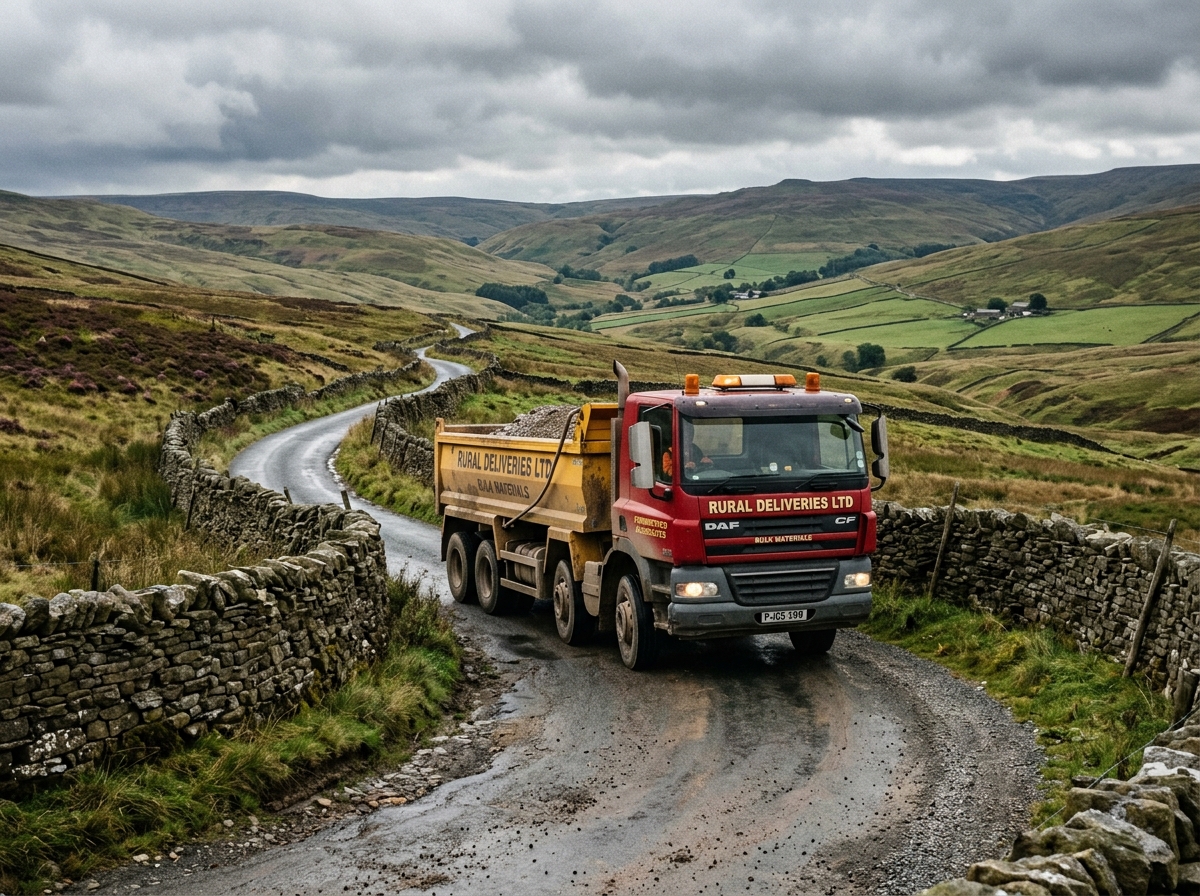
Every mile a heavy goods vehicle travels without a load is a mile that costs money but generates no revenue. Fuel is burned, tyres wear, driver hours are consumed, and the vehicle depreciates — all without contributing a single pound to the bottom line. In the haulage industry, this is known as empty running, and it is one of the most persistent and costly inefficiencies in road transport.
According to Department for Transport statistics, UK heavy goods vehicles run empty on approximately 28 to 30 per cent of their total mileage. For some sectors — particularly those involving specialist vehicles or remote delivery locations — the figure is significantly higher. Across a fleet of twenty vehicles, each covering 100,000 miles per year, a 30 per cent empty running rate means 600,000 miles driven with nothing on the back. At a conservative cost of £1.20 per mile, that is £720,000 per year in unproductive running.
Eliminating empty miles entirely is not realistic — vehicles will always need to return to base or reposition for their next job. But reducing empty running by even a few percentage points can deliver substantial savings. Here is how.
Understanding why vehicles run empty
Before you can reduce empty miles, you need to understand why they happen. The most common causes include:
One-way demand patterns
Many haulage operations involve delivering material in one direction — aggregates from a quarry to a construction site, waste from a collection point to a transfer station, goods from a warehouse to a retail location. The return journey has no natural load, so the vehicle comes back empty.
Poor planning and visibility
When dispatchers do not have a clear view of what vehicles are doing, where they are, and what jobs are available, they cannot identify opportunities to combine trips or fill return legs. This is especially common in operations that rely on whiteboards, phone calls, and paper-based scheduling.
Inflexible scheduling
Jobs booked with rigid time windows can make it impossible to fit in additional collections or deliveries on the return leg. If a vehicle must be back at base by a specific time, there may not be enough flexibility to divert to a backload opportunity.
Vehicle type constraints
A tipper that has just delivered aggregates cannot necessarily pick up a load of packaged goods on the way back. Vehicle specialisation limits backloading opportunities, particularly for operators running specialist fleets.
Customer expectations
Some customers expect dedicated vehicles and will not accept shared loads. Others require specific delivery windows that do not align with available backloads. These constraints are real and must be respected, but they can sometimes be negotiated.
Strategies for reducing empty miles
1. Optimise route planning
The most direct way to reduce empty running is to plan routes that minimise the distance between the last drop-off and the next pick-up. Modern route optimisation software can analyse all pending jobs and calculate the most efficient sequence, taking into account vehicle locations, delivery windows, vehicle capacities, and road conditions.
For operators managing multiple vehicles across multiple sites, the complexity of route planning quickly exceeds what a human dispatcher can handle effectively. Software that considers the entire fleet as a network — rather than planning each vehicle in isolation — can identify combinations and sequences that a manual planner would miss.
2. Plan backloads proactively
Backloading — filling the return leg of a journey with a paying load — is the most obvious way to reduce empty miles. But it requires proactive planning and good information.
Start by mapping your regular traffic flows. Where do your vehicles go most frequently? What loads are available in those areas for the return journey? For waste and aggregate operators, there are often natural complementary flows: a vehicle delivering aggregates to a construction site might be able to collect excavation waste for the return trip.
Building relationships with complementary businesses — or using freight exchange platforms — can open up backloading opportunities that would not otherwise be visible.
3. Consolidate loads
Instead of sending two half-loaded vehicles to nearby destinations, consolidate the loads onto a single vehicle. This requires visibility of all pending orders and the flexibility to adjust delivery schedules, but the savings in fuel, driver time, and vehicle wear can be substantial.
Load consolidation is particularly effective for operations with variable daily volumes. On quieter days, consolidating loads onto fewer vehicles reduces empty running and frees up the remaining vehicles for other work.
4. Use real-time scheduling
Static schedules — planned the night before and followed regardless of what happens during the day — cannot adapt to changing circumstances. A cancelled delivery, an early completion, or an unexpected order all create opportunities to reduce empty running, but only if the dispatcher knows about them in time and has the tools to respond.
Real-time scheduling systems, integrated with fleet management tracking, give dispatchers a live view of every vehicle’s position and status. When a vehicle finishes a job early, the system can immediately suggest the next most efficient task, minimising the empty miles between jobs.
5. Adjust delivery windows
If your customers are willing to accept slightly wider delivery windows, the flexibility can significantly improve your route planning options. A window of “morning” rather than “between 9 and 10 am” might be enough to allow a backload on the inbound journey.
This is a commercial conversation, not a technical one. Some customers will value the cost savings that flexible scheduling enables; others will not. But it is worth having the conversation, particularly with regular customers who benefit from a long-term relationship.
6. Analyse and measure
You cannot improve what you do not measure. Track your empty running rate across the fleet, by vehicle, by route, and by customer. Identify the journeys that consistently generate the most empty miles and focus your improvement efforts there.
Your platform should provide reporting that makes this analysis straightforward. Look for trends over time — is your empty running rate improving or worsening? Are specific routes or customers disproportionately responsible?
The role of technology
Technology alone does not eliminate empty miles, but it provides the visibility, analysis, and planning tools that make reduction possible. The key capabilities to look for include:
- Multi-drop route optimisation that considers vehicle capacity, time windows, and live traffic
- Real-time vehicle tracking with estimated arrival times and job status updates
- Load planning tools that visualise vehicle capacity and suggest consolidation opportunities
- Backload matching that identifies available loads near a vehicle’s current location or planned route
- Performance dashboards that track empty running rates and highlight improvement opportunities
For waste and aggregate operators, integration with weighbridge systems is particularly valuable. Knowing the weight of every load at every point in the journey enables accurate capacity planning and ensures vehicles are loaded to their optimal weight, not just their optimal volume.
The financial and environmental case
Reducing empty miles is one of the few operational improvements that benefits both the balance sheet and the environment simultaneously. Every empty mile eliminated saves fuel and reduces carbon emissions. For operators facing increasing pressure to demonstrate their environmental credentials — whether from customers, regulators, or their own sustainability commitments — this is an important consideration.
The financial case is straightforward. A fleet of twenty vehicles reducing its empty running rate from 30 per cent to 22 per cent saves approximately £192,000 per year in direct costs. The environmental case is equally compelling: that reduction equates to roughly 160 fewer tonnes of CO2 per year.
In an industry where margins are tight, reducing empty miles is one of the most effective levers available. It does not require new vehicles, new routes, or new customers — just better planning, better tools, and a commitment to measuring and improving.