
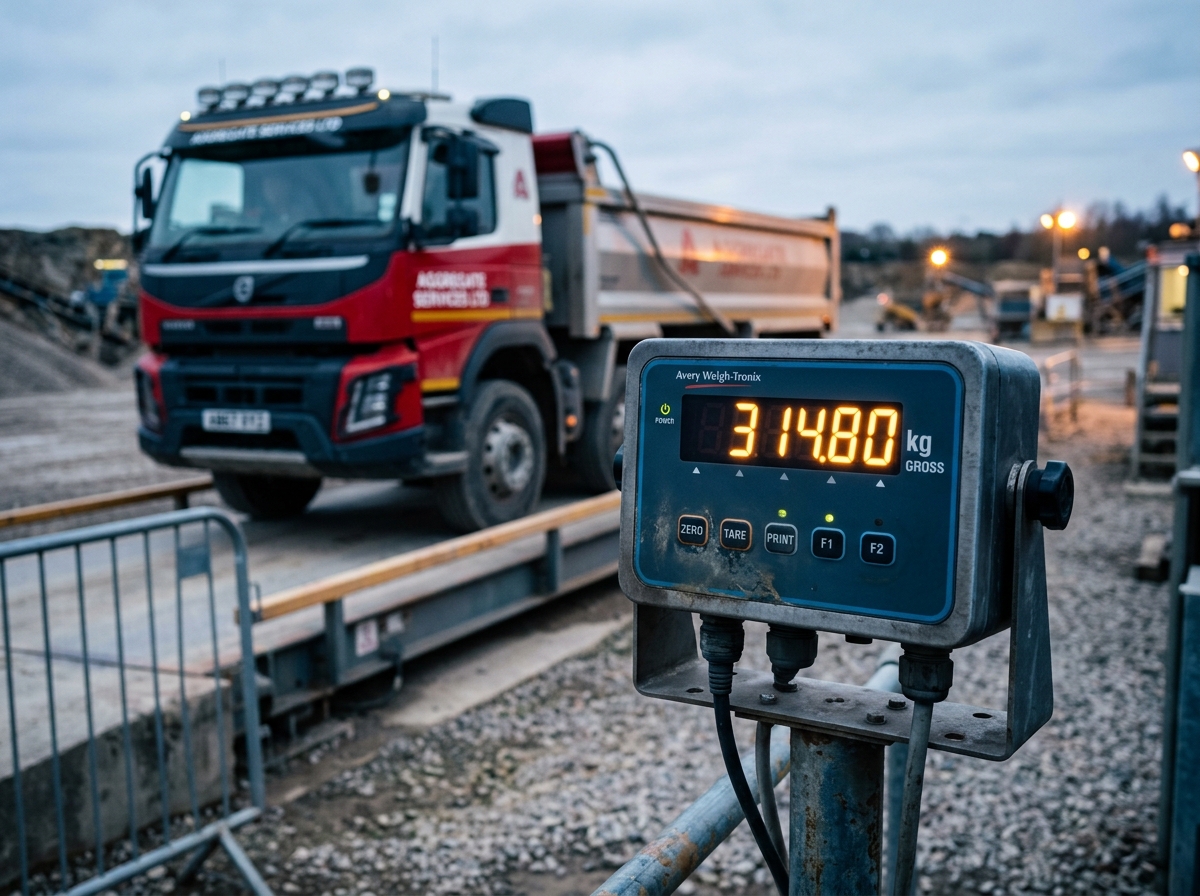
The weighbridge software market in 2026
The UK weighbridge software market has changed significantly in the past few years. What was once a niche category dominated by a handful of legacy vendors now includes modern cloud-based platforms, integrated business systems, and specialist tools for different parts of the waste, aggregate, and recycling industries.
If you are evaluating weighbridge software for your operation — whether you are replacing an existing system or moving from manual processes — the range of options can be overwhelming. This guide cuts through the noise and focuses on what actually matters when choosing a weighbridge management platform.
What weighbridge software should do
At its core, weighbridge software replaces manual ticket books with a digital system for recording vehicle weights, material types, and transaction details. But the best modern platforms go well beyond basic weight recording.
Here is what you should expect from a weighbridge system in 2026:
Automatic vehicle identification
Vehicle identification should not start from a blank field. When a lorry arrives, the system should already hold it — against your own fleet or against the haulier who runs it — so that entering the registration pulls through the carrier registration, the recorded tare, the customer and the agreed rate. Some sites add ANPR cameras on top of that; the record underneath is what matters, because a camera that reads a muddy plate wrong is only useful if there is something correct to match it against.
Manual vehicle identification — where an operator types a registration from scratch every visit — is slow and error-prone. At minimum, a system should hold vehicles against the haulier who runs them, so a returning lorry pulls through its own carrier registration and tare rather than being re-keyed.
Digital e-tickets
Every weighbridge transaction should generate a digital e-ticket containing:
- Gross weight, tare weight, and net weight
- Material classification
- Vehicle registration and driver details
- Timestamps for entry and exit
- Operator identification
- Any special flags (hazardous material, contamination, etc.)
These e-tickets should be searchable, exportable, and — critically — should flow automatically into your invoicing and compliance reporting workflows. If you are still re-keying data from weighbridge tickets into a separate invoicing system, you are doing unnecessary work.
Hazardous material handling
For waste operators, the ability to flag and track hazardous materials at the weighbridge is essential. Your system should support configurable alerts that warn operators about hazardous loads before they reach the tipping area, and special handling workflows that ensure compliance with environmental regulations.
Real-time site visibility
A modern weighbridge platform should give you a live view of your site: vehicles currently on the weighbridge, vehicles queued, vehicles on site, and recent departures. This is not just about operational awareness — it is about capacity management and customer service.
Audit trail
Every transaction, override, and edit should be logged with an operator ID and timestamp. When the Environment Agency comes knocking, you should be able to produce a complete audit trail in seconds, not hours of sifting through filing cabinets.
Key questions to ask vendors
When evaluating weighbridge software, these questions will separate the serious contenders from the rest:
1. How does your system integrate with invoicing?
The most valuable feature of modern weighbridge software is not the weighing — it is what happens after. Weighbridge data should flow directly into invoicing, with contract-specific pricing applied automatically. If invoicing is a separate module from a different vendor, you are building in manual steps and integration risk.
2. Can it handle multiple sites?
If you operate more than one site, you need a platform that centralises data across all locations. You should be able to view tonnage, revenue, and compliance data across every site from a single dashboard, without logging into separate systems.
3. What happens when the internet goes down?
Cloud-based systems offer significant advantages, but your weighbridge cannot stop operating because of a connectivity issue. Ask vendors about offline capability and data synchronisation when connectivity is restored.
4. How does the system handle internal transfers?
If you move material between your own sites, the system should support dedicated internal transfer workflows that keep stock levels accurate without generating customer invoices.
5. What is the implementation timeline?
Legacy systems are notorious for drawn-out implementations. A modern platform should be operational within weeks, not months. Ask for references from similar-sized operations and check their actual go-live timelines.
Legacy systems vs modern platforms
The biggest decision most operators face is whether to stick with a legacy system or move to a modern platform. Here is how they typically compare:
Legacy systems have been around for decades. They are often Windows desktop applications that run on local servers, with limited remote access and basic reporting. They work — many operations have run on them for years — but they carry increasing technical debt. Updates are infrequent, support contracts are expensive, and integration with other business systems ranges from difficult to impossible.
Modern cloud-based platforms are built on current technology stacks, accessible from any device with a browser, and designed to integrate with other business systems from day one. They receive regular updates, offer real-time dashboards, and typically cost less than legacy systems when you factor in infrastructure and support.
The risk of staying on a legacy system is not that it will suddenly stop working — it is that it will increasingly hold your operation back. When competitors are invoicing straight from weighbridge data and you are still re-keying tickets into a spreadsheet, the gap compounds.
Integration matters more than features
When comparing weighbridge software, it is tempting to focus on feature lists. But the feature that delivers the most value is not on any list — it is integration.
A weighbridge system that feeds data directly into your fleet management, route optimisation, and invoicing saves you hours of manual work every day. A weighbridge system that operates in isolation — no matter how good its weighing features — creates data silos that have to be bridged manually.
When evaluating vendors, ask: what happens to my weighbridge data after the vehicle leaves the site? If the answer involves exporting CSVs, copying data, or “we integrate with most accounting packages via API,” dig deeper. The best platforms make this invisible — data flows automatically from weighbridge to invoice to accounts.
What to look for in 2026 specifically
Several trends are shaping the weighbridge software market this year:
Digital waste transfer notes: The Environment Agency is pushing toward mandatory digital waste tracking, with full implementation expected by October 2026. Any weighbridge system you choose should support digital waste transfer notes natively, not as an afterthought.
Mobile access: Site managers, operations directors, and finance teams all need access to weighbridge data from their devices. Browser-based platforms that work on tablets and phones are no longer optional.
API-first architecture: If you use other business systems — accounting software, ERP, CRM — your weighbridge platform should offer robust APIs for data exchange. Closed systems that cannot talk to anything else are a dead end.
Making the switch
If you are currently running a manual weighbridge or an ageing legacy system, the thought of switching can be daunting. But the reality is usually less disruptive than expected.
Modern platforms are designed for quick implementation. Your historical data can typically be imported, your team can be trained in a day, and the system can run alongside your existing process during a transition period.
The question is not whether to modernise your weighbridge — it is how much longer you can afford not to. Every day of manual tickets is a day of unnecessary admin, avoidable errors, and missed insights.
Heavy Tech provides weighbridge software with digital e-tickets, contract pricing, invoicing and DEFRA digital waste tracking for UK waste, aggregate and haulage operators. See how it works or book a demo.