
The paper ticket problem
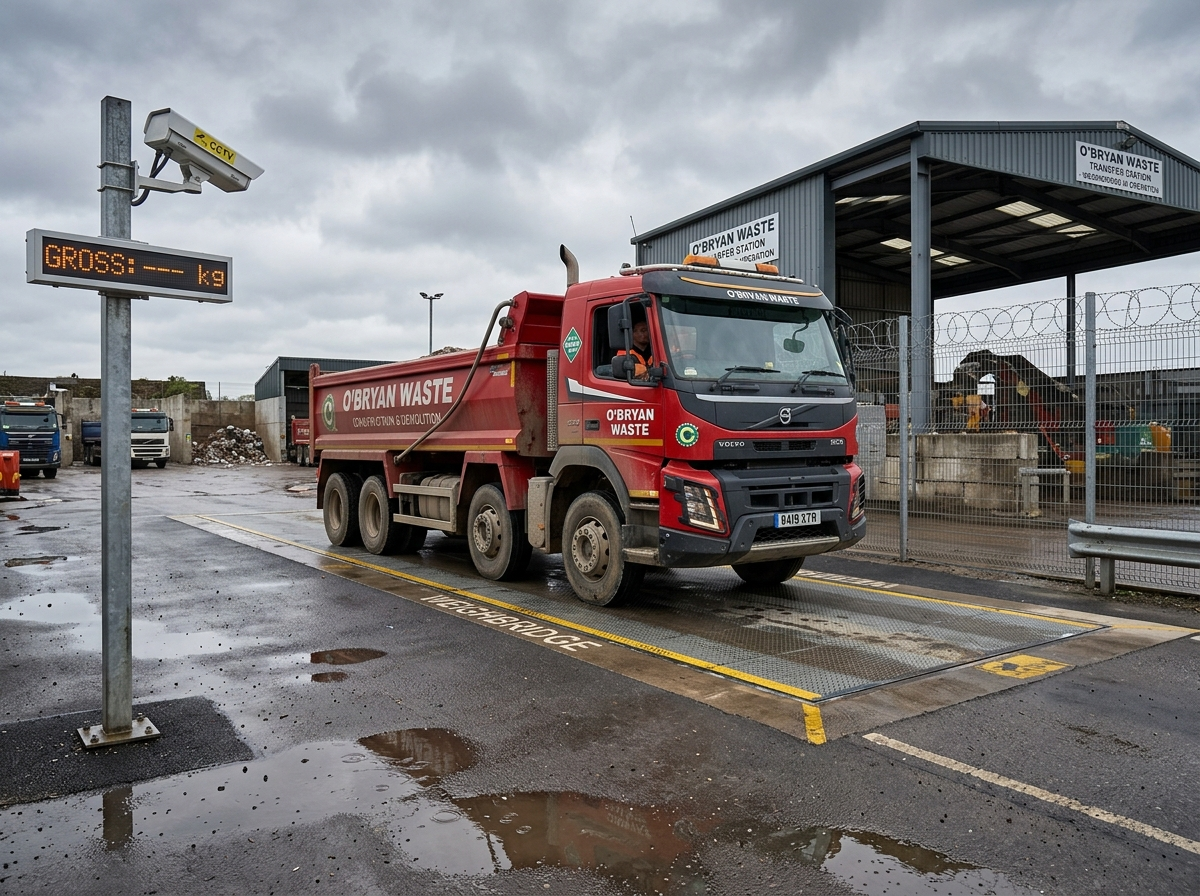
Walk onto most waste transfer stations in the UK and you will find the same scene: a weighbridge clerk sitting in a cabin, scribbling weights onto carbon-copy dockets, filing them into trays, and hoping that nothing gets lost before month-end invoicing. It is a system that has persisted for decades — and it is costing waste companies far more than they realise.
Paper weighbridge tickets are not just old-fashioned. They are a genuine liability. They introduce errors at every stage of the process, from the initial recording of a weight to the eventual reconciliation with customer accounts. They slow down throughput, create bottlenecks during busy periods, and leave operators scrambling when regulators request an audit trail.
Digital weighbridge systems solve all of these problems. Yet many waste companies remain hesitant to make the switch, often because they underestimate just how much their paper-based processes are holding them back.
The hidden costs of paper tickets
Data entry errors
Every time a weight is written down by hand and later typed into a spreadsheet or accounting system, there is a chance of error. A transposed digit, a misread decimal point, or a simple typo can cascade through your invoicing process. A load recorded as 8.1 tonnes instead of 18.1 tonnes does not just affect one invoice — it distorts your material tracking, your regulatory returns, and your profitability analysis.
Studies across industries consistently show that manual data entry has an error rate of between one and five per cent. On a busy waste site processing 150 to 200 loads per day, that translates to several incorrect records every single day.
Lost and damaged tickets
Paper gets wet. Paper gets torn. Paper gets left in cab pockets, blown off desks, or simply misfiled. Every lost ticket represents a transaction that cannot be invoiced with confidence. Over the course of a year, those lost tickets can represent thousands of pounds in unrecoverable revenue.
Even when tickets are not lost entirely, illegible handwriting or faded print can make them difficult to process. Office staff spend hours trying to decipher what was written, chasing drivers and weighbridge operators for clarification.
Slow month-end reconciliation
If your invoicing team is working from paper dockets, month-end reconciliation is a painful, time-consuming exercise. Tickets need to be gathered from multiple sources, sorted, checked against delivery schedules, and manually entered into your billing system. This process can take days, delaying invoicing and extending your cash cycle.
Compliance risk
The Environment Agency expects waste operators to maintain accurate, auditable records of all material movements. Paper-based systems make this difficult. When an inspector asks to see records for a specific date range, vehicle, or material type, producing that information from a filing cabinet of paper tickets is slow and error-prone. In the worst case, incomplete records can lead to enforcement action.
What a digital weighbridge system changes
A modern weighbridge software platform replaces paper at every step of the transaction. Here is what that looks like in practice.
Automatic weight capture
When a vehicle drives onto the weighbridge, the weight is captured directly from the indicator and recorded in the system. There is no manual reading, no handwriting, and no transcription. The data is accurate to the resolution of your load cells, every single time.
Vehicle recognition with ANPR
Automatic number plate recognition cameras identify the vehicle as it arrives. The system matches the registration to a known haulier and customer account, pre-populating the transaction with the correct details. This eliminates the need for the weighbridge clerk to ask the driver who they are, who they are delivering for, and what material they are carrying — information that is often communicated inaccurately through a cabin window.
Digital tickets generated instantly
The moment a transaction is complete, a digital ticket is generated and stored against the record. It can be emailed to the haulier and customer automatically, printed if required, or simply held in the system for retrieval at any time. No paper, no filing, no risk of loss.
Direct integration with invoicing
This is where the real time savings emerge. When your weighbridge data feeds directly into your invoicing system, there is no re-keying of data at month end. Every transaction is already in the system, priced correctly, and ready to be invoiced. What used to take days can be accomplished in minutes.
The throughput advantage
Speed matters at the weighbridge. During peak hours, queues of vehicles waiting to be weighed can stretch back onto public roads, creating safety hazards and frustrating drivers. Every minute saved per transaction multiplies across hundreds of daily loads.
A fully automated weighbridge transaction — with ANPR recognition, automatic weight capture, and electronic ticketing — can be completed in under 30 seconds. A manual, paper-based transaction typically takes two to four minutes. On a site processing 200 loads per day, that difference translates to several hours of saved time and significantly reduced queuing.
For waste companies operating across multiple sites, these efficiency gains are amplified further. Centralised digital systems allow managers to monitor throughput at every location in real time, identifying bottlenecks before they become problems.
Addressing common concerns
“Our weighbridge operators are not tech-savvy”
Modern weighbridge software is designed for industrial environments and non-technical users. The interfaces are simple, the workflows are guided, and most operators become comfortable within a day or two of training. The system actually makes their job easier by removing the burden of paperwork.
“We have invested in our current setup”
Digital weighbridge systems are designed to work with existing hardware. You do not need to replace your weighbridge, your indicator, or your barriers. The software connects to what you already have, adding a layer of intelligence and automation on top.
“What about when the internet goes down?”
Good weighbridge software platforms are designed to handle connectivity interruptions. Transactions can be captured locally and synchronised when the connection is restored. Your weighbridge does not stop working just because the internet hiccups.
The bottom line
Paper weighbridge tickets are a relic of a time when there was no alternative. Today, digital weighbridge management systems are mature, affordable, and proven in the toughest industrial environments. They reduce errors, speed up throughput, simplify compliance, and — perhaps most importantly — they ensure that every tonne of material crossing your site is accurately recorded and correctly invoiced.
For waste companies still running on paper, the question is not whether to go digital. It is how much longer you can afford not to.