
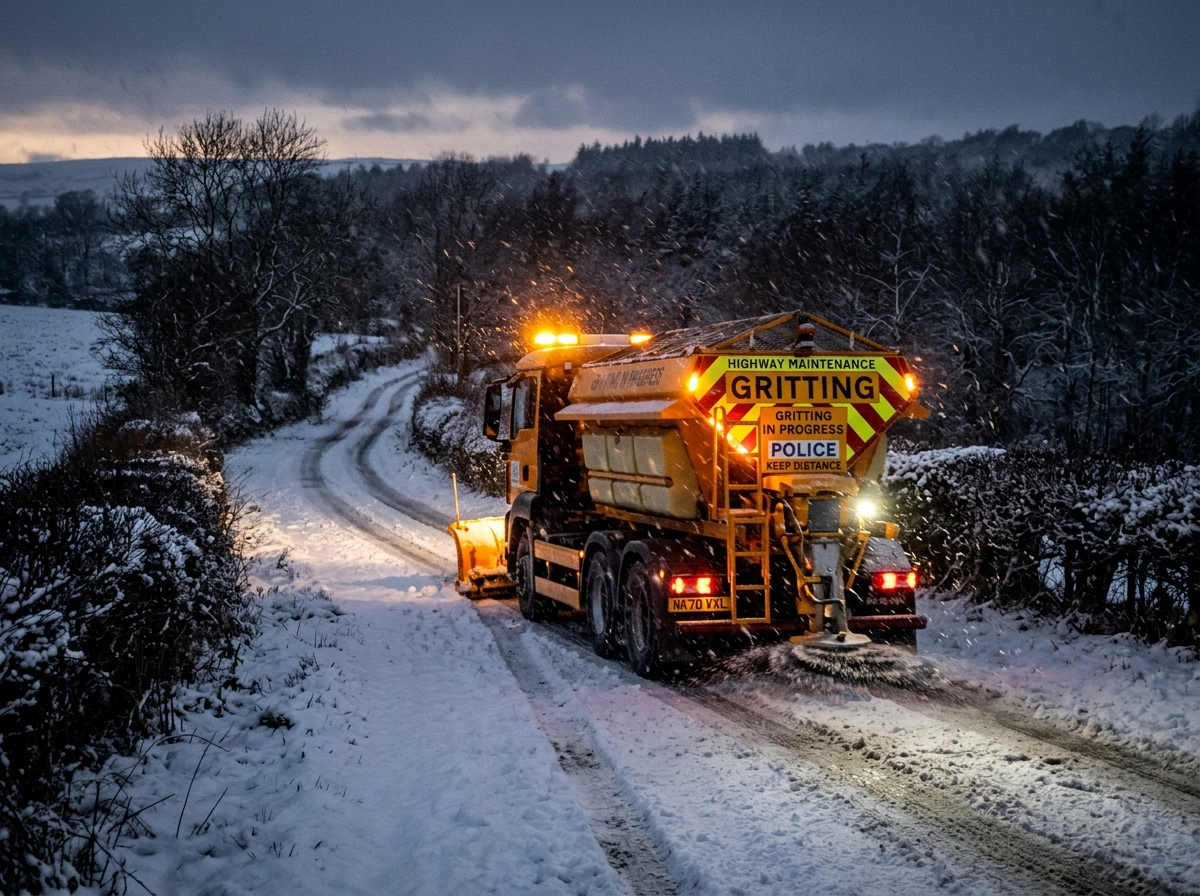
Preparing your fleet for winter
Winter is the hardest season for heavy vehicle fleets. Cold temperatures stress batteries, thicken fluids, and make metal brittle. Wet and icy roads increase the risk of accidents and breakdowns. Shorter daylight hours mean more driving in darkness, placing greater demands on lighting and driver alertness. And all of this happens during a period when many operators — particularly those in waste collection, gritting, and construction — face their highest operational demands.
A proactive approach to winter fleet maintenance reduces breakdowns, prevents accidents, improves driver welfare, and keeps your operation running when it matters most. This checklist covers the key areas that fleet managers and workshop teams should address before the cold weather arrives.
Tyres
Tyres are your vehicles’ only contact with the road, and in winter conditions their condition is critical.
Tread depth
The legal minimum tread depth for heavy goods vehicles in the UK is 1mm across three-quarters of the breadth and around the entire circumference. However, for winter driving, this minimum is inadequate. Aim for at least 3mm to maintain acceptable grip in wet and cold conditions. Tyres approaching the minimum should be replaced before winter, not during it.
Tyre pressure
Cold temperatures cause tyre pressures to drop — approximately 1 PSI for every 5°C reduction in ambient temperature. Under-inflated tyres have reduced grip, increased rolling resistance, and accelerated wear. Check pressures more frequently during winter months, and always check when tyres are cold.
Tyre condition
Inspect sidewalls for cuts, bulges, and cracking. Cold weather makes rubber less flexible, and tyres with existing damage are more likely to fail in cold conditions. Pay particular attention to tyres on vehicles that operate on rough surfaces — quarries, construction sites, and waste transfer stations.
Winter tyres and chains
For vehicles operating in areas prone to ice and snow, consider fitting winter tyres or carrying snow chains. Winter tyres use a softer compound and deeper tread pattern that provides significantly better grip below 7°C. Snow chains may be required for access to remote or elevated sites during severe weather.
Batteries
Battery failure is the single most common cause of winter breakdowns in heavy vehicles. Cold temperatures reduce a battery’s cranking power while simultaneously increasing the engine’s resistance to turning over.
Battery testing
Test all batteries before winter using a conductance or load tester. A battery that performs adequately in warm weather may fail in the cold. Replace any battery that tests as marginal — it is far cheaper to replace a battery in the workshop than to call out recovery for a vehicle that will not start on a freezing morning.
Connections and terminals
Clean and tighten all battery terminals. Corrosion increases electrical resistance, reducing the power available for starting. Apply a protective grease or terminal spray to prevent corrosion during the winter months.
Charging system
Check the alternator output and charging system to ensure batteries are being fully charged during operation. A weak alternator that keeps the battery topped up in summer may not cope with the increased electrical demands of winter — heating, lighting, wipers, and demisters all draw additional power.
Auxiliary batteries
Vehicles with auxiliary systems — tail lifts, hydraulic cranes, body heating — often have separate batteries. Do not forget to include these in your winter checks.
Cooling system
Paradoxically, the cooling system is one of the most critical winter maintenance items. Engine coolant serves a dual purpose: it removes excess heat during operation and prevents the engine block from freezing when the vehicle is standing.
Antifreeze concentration
Test the antifreeze concentration in every vehicle. The coolant should be protected to at least minus 20°C for UK operations — lower for vehicles operating in Scotland or at elevation. Use a refractometer for accurate testing; test strips are less reliable.
Coolant condition
Check the condition of the coolant, not just its concentration. Degraded coolant can cause corrosion in the engine and heater matrix. If the coolant is discoloured, contains sediment, or has not been changed within the manufacturer’s recommended interval, flush and replace it.
Hoses and connections
Inspect all coolant hoses for cracks, swelling, and softness. Cold temperatures cause rubber hoses to contract, which can reveal weaknesses that are not apparent in warmer weather. Check all hose clips and connections for tightness.
Lighting
With sunrise after 8am and sunset before 4pm during the darkest winter months, your vehicles will spend a significant proportion of their operating hours in darkness or poor visibility.
Headlights and rear lights
Check all headlights, tail lights, brake lights, and indicators. Replace any blown bulbs immediately. Clean lens covers that are clouded or dirty — a dirty headlight can reduce light output by 50 per cent or more.
Marker lights and reflectors
Heavy vehicles rely on marker lights and reflectors for visibility. Check every one, including side markers and the lights on any attached trailers or bodies. A missing reflector that goes unnoticed in summer will be identified at a roadside inspection in winter.
Beacon lights and hazard lighting
Vehicles working on roads, construction sites, or in poor visibility should have functioning beacon lights. Check that these operate correctly and that lenses are clean and undamaged.
Light alignment
Misaligned headlights reduce visibility for the driver and can dazzle oncoming traffic. Have headlight alignment checked and adjusted as part of your winter preparation.
Heating and demisting
Driver comfort and safety depend on a functioning heating and demisting system. A vehicle with a windscreen that will not clear is not safe to drive.
Cab heater
Test the cab heater on every vehicle. Check that it produces adequate heat, that the blower works at all speeds, and that the air distribution controls function correctly. A cab heater that is slow to warm up or produces insufficient heat may have a blocked heater matrix, a faulty thermostat, or low coolant level.
Windscreen demisters
Test front and rear demisters. Ensure that the airflow is directed correctly and that the system clears the windscreen effectively. Blocked demister vents are common and easily fixed.
Air conditioning
Modern vehicles use the air conditioning system to demist the windscreen. If the A/C system has not been serviced recently, it may not function effectively for demisting. Consider an A/C service as part of your winter preparation.
Wipers and washers
Wiper blades
Replace wiper blades that are streaking, juddering, or leaving unwiped areas. Winter driving demands effective wipers — road spray from other vehicles, rain, and sleet can reduce visibility rapidly. Carry spare blades on each vehicle.
Washer fluid
Fill washer reservoirs with a screenwash solution rated for low temperatures. Pure water will freeze in the reservoir and pipes, leaving the driver without the ability to clear a dirty windscreen. Check that all washer jets are clear and correctly aimed.
Washer system
Check that the washer pump operates correctly and that all pipes are in good condition. On vehicles with rear washers, check these too.
Braking system
Winter conditions demand the most from your braking systems. Wet and icy roads extend stopping distances significantly.
Brake inspection
Carry out a thorough brake inspection, checking pad and lining thickness, disc and drum condition, and caliper operation. Brakes that are approaching their service limit should be replaced before winter.
Air system
For air-braked vehicles, check the entire air system for leaks. Drain air tanks and check that automatic drain valves are functioning. Moisture in the air system can freeze, causing brake failure — one of the most dangerous winter faults.
ABS and EBS
Check that anti-lock braking and electronic braking systems are functioning correctly with no dashboard warnings. These systems are particularly important on slippery winter roads.
Fuel system
Fuel additives
Diesel can gel or wax in very cold temperatures, blocking filters and preventing the engine from running. If your vehicles operate in areas that experience temperatures below minus 5°C, consider using a winter-grade diesel additive or ensuring your fuel supplier provides winter-grade diesel.
Fuel filters
Replace fuel filters before winter. A partially blocked filter that copes in warm weather may restrict fuel flow when diesel viscosity increases in the cold.
Fuel tanks
Check fuel tanks for water contamination. Water in the fuel system can freeze, causing blockages. Drain any water from fuel/water separators.
Emergency equipment
Every vehicle should carry winter emergency equipment:
- Ice scraper and de-icer for windscreens and mirrors
- Hi-visibility vest and torch in case of breakdown in darkness
- Warm clothing and blanket for the driver in case of extended breakdown
- Shovel for vehicles operating on unpaved surfaces
- Jump leads or a portable jump pack as a backup for battery failure
- First aid kit — check it is complete and in date
Using technology to manage winter maintenance
Tracking all of these maintenance items across a fleet of heavy vehicles is a significant administrative task. Fleet management software with maintenance scheduling capabilities ensures that nothing is missed.
A good system will:
- Schedule winter preparation tasks and track their completion across every vehicle
- Flag overdue items so that no vehicle goes into winter unprepared
- Record defects reported by drivers during daily walkaround checks
- Track parts and consumables used in winter preparation
- Generate compliance reports showing the maintenance status of every vehicle in the fleet
Digital walkaround check apps allow drivers to report winter-specific issues — frozen washers, slow heaters, poor wipers — directly from their phone, with reports flowing into the workshop management system immediately.
For operators managing fleets across multiple sites, centralised fleet management ensures that every location follows the same winter preparation standards.
Start early
The most important piece of advice for winter fleet maintenance is to start early. Do not wait for the first frost to discover that half your batteries are weak and your washer fluid is frozen. Begin your winter preparation programme in October, giving your workshop team time to work through the entire fleet systematically.
A fleet that enters winter well-prepared will run more reliably, break down less often, and — most importantly — keep your drivers safe on the road.