
Four months of work, in four months
Solid fuel merchants run repeating rounds to hundreds of households, mostly in the four months the weather decides. Heavy Tech holds the round, orders the drops, and brings back a signature from each one.
The season does not wait for the paperwork
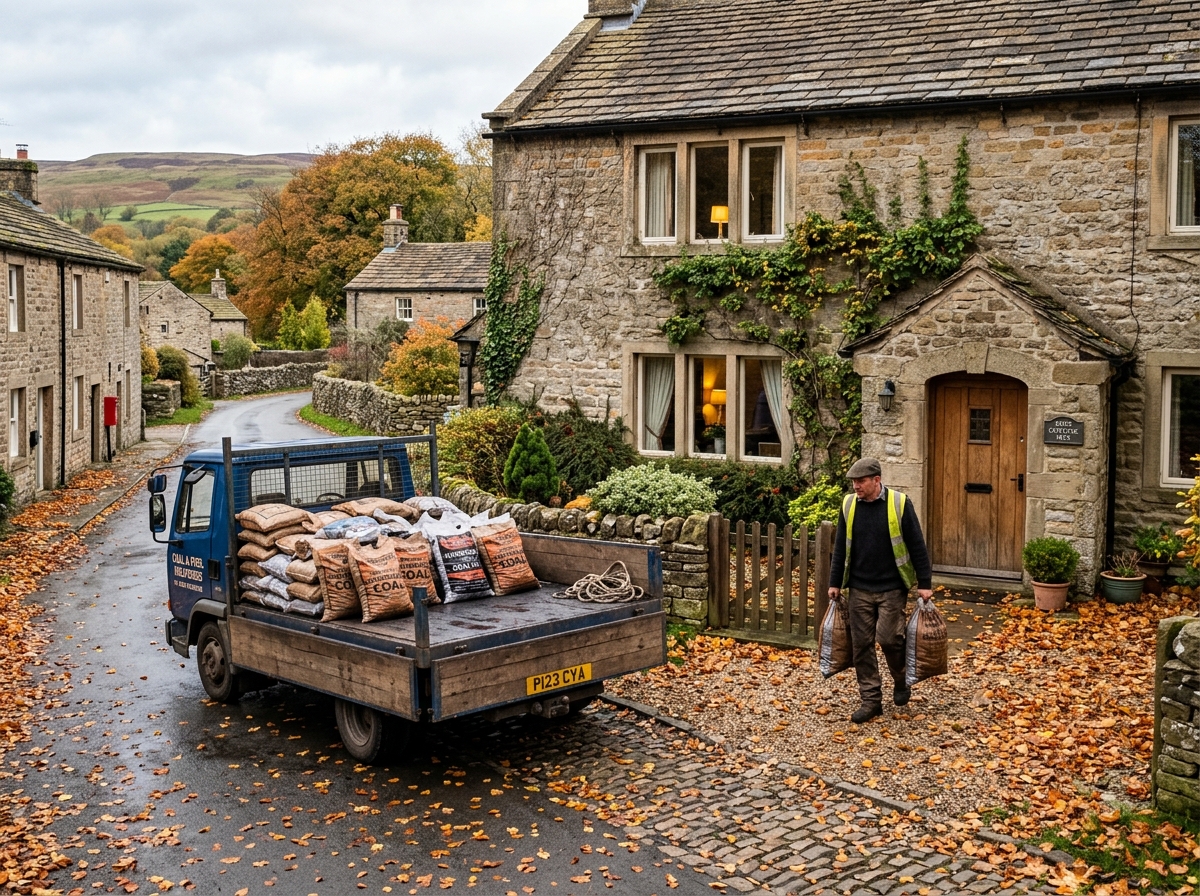
A solid fuel merchant does most of a year’s trade between October and February, running repeating rounds to hundreds of households down lanes that do not appear on any optimiser’s idea of a road. The rounds work because a planner has them memorised, and they stop working the week that planner is off.
Then there is the proof. A driver completes thirty drops, brings back a sheet and a bag of cash, and somebody reconciles both against orders that were taken by phone. When a customer rings in March to say a delivery never came, there is no useful answer.
Heavy Tech holds the round, orders the drops against real road distances, and brings back a signature and a photograph from each one.
What tends to be hard
- Rural multi-drop rounds ordered by hand from a planner’s memory of the lanes
- Demand that quadruples between October and February and then stops
- Proof that a delivery was made, months after the customer disputes it
- Cash collected on the round reconciled against what the driver brings back
- Order frequency for regular customers, without re-keying the round each week
How it runs on a merchant's round
The week ahead
Rounds laid onto a weekly calendar, with repeat customers carried over rather than re-keyed.
Ordering the lanes
Real road distances, three algorithms, and a planner who knows which farm track floods. See routes and deliveries.
At the door
The stop is completed on the phone with a signature and a photograph, so a disputed delivery in March has an answer.
Back at the yard
Cash collected on the round reconciled against what the driver returns, with the difference visible rather than assumed.
Questions we get asked
Can we set up rounds that repeat?
Yes. Rounds hold work that recurs, route areas group stops geographically, and orders can carry a frequency — so a regular customer does not need re-entering every week.
How are the drops ordered?
By one of three algorithms over real road distances from OSRM, with a straight-line fallback if the routing service is unreachable. The planner can then drag stops into a different order.
What does the driver carry?
An app showing their own route. They complete each stop and capture a signature and a photograph, which come back against proof of delivery.
Can we reconcile cash collected on the round?
Yes. Cash amounts are recorded against the route, and there is a driver-returned reconciliation for checking what came back against what was collected.
Does it cope with seasonal demand?
The work is held as rounds and orders rather than as a fixed schedule, so adding vehicles and drops for the winter is a matter of planning more routes, not reconfiguring the system.
How do customers get billed?
Completed stops feed an invoice run that groups them by customer across a date range, priced from the rates already on the order. See invoicing.