
Material to site, spoil away from it
A site needs aggregate delivered and spoil taken off, often on the same day and the same lorry. Heavy Tech books both against the contract, draws the tonnage down against its allowance, and files the muck away as a waste movement.
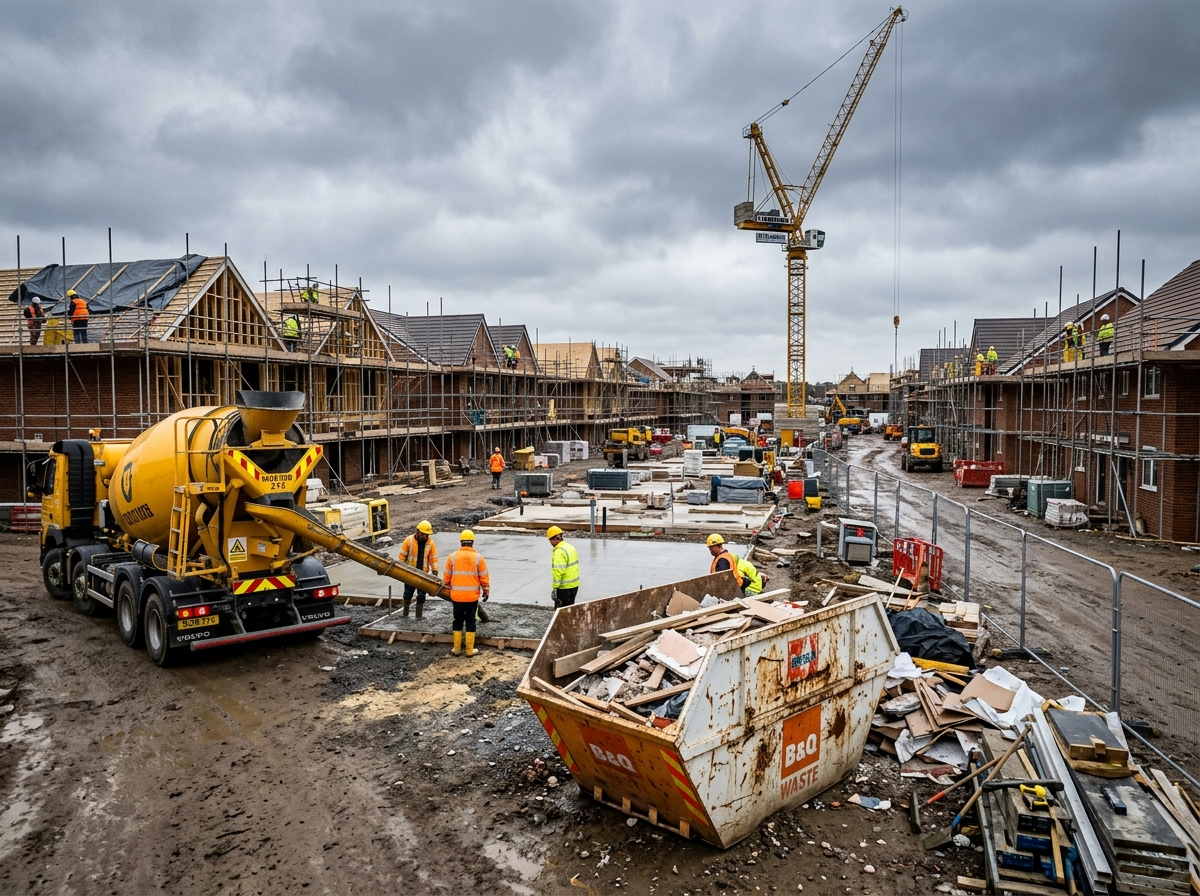
Two flows, usually run as two systems
A construction site needs aggregate brought in and spoil taken off, often on the same day and sometimes on the same lorry. In most operations those are handled by different people, tracked in different places, and reconciled against the contract at the end of the month if at all.
The muck away leg carries an obligation the delivery leg does not. Spoil arriving at a permitted site is a waste movement: it needs a producer, a permit, a SIC code, an EWC code and a carrier with a registration that has not lapsed. Chasing that after the fact, from a site that has moved on, is the least popular job in the business.
Heavy Tech books both legs against the contract, draws the tonnage down as loads land, and carries the producer detail on the ticket from the start.
What tends to be hard
- Contract tonnage allowances drawn down as loads land, not counted at month end
- Spoil leaving site as a waste movement with a producer, a permit and an EWC code
- Deliveries and collections planned together so lorries are not running back empty
- Call-off loads against a contract, ordered by the site rather than the office
- Hire and haulage costs attributed to the right project for cost control
How it runs across a project
Aggregate to site
Called off against the contract, planned onto a route, and delivered against a signature. See routes and deliveries.
Spoil away
Weighed in at the receiving site as a waste movement, with the producer’s permit and SIC code on the ticket. See waste compliance.
The allowance
Contract tonnage draws down as loads land, logged with a note and a user, rather than being counted up at month end. See contracts and pricing.
Both legs, one lorry
Delivery and collection are stops on the same route, so a vehicle bringing stone in is not running back empty.
Questions we get asked
How do contract tonnage allowances work?
A contract holds an allowance in tonnes. As loads land against it the balance draws down, and every movement is logged with an amount, a note, the user who made it and a timestamp — so a dispute about how much of an allowance was used has an answer.
Does muck away have to be filed as a waste movement?
Yes, if it goes to a permitted site. The receiving site files the receipt within two working days, and the record carries the producer’s organisation, address, permit and SIC code — which is why Heavy Tech holds those on the ticket rather than chasing them afterwards.
Can a site call off loads against a contract?
Yes. Call-off loads are raised against a contract with their own waypoints, and can be edited on the route as the day changes.
Can deliveries and collections be planned together?
Yes. Both are stops on a route, so a lorry delivering aggregate to a site and taking spoil away from it is one plan rather than two.
Does Heavy Tech do plant hire?
No. It covers material movement — aggregate deliveries in, muck away out, the weighbridge at each end, and the contracts and invoicing around them. Plant hire is not part of the platform.
Can we attribute costs to a project?
Work is held against the contract and the customer site, and the purchase ledger holds subcontracted haulage costs, so revenue and cost for a job sit in the same system.